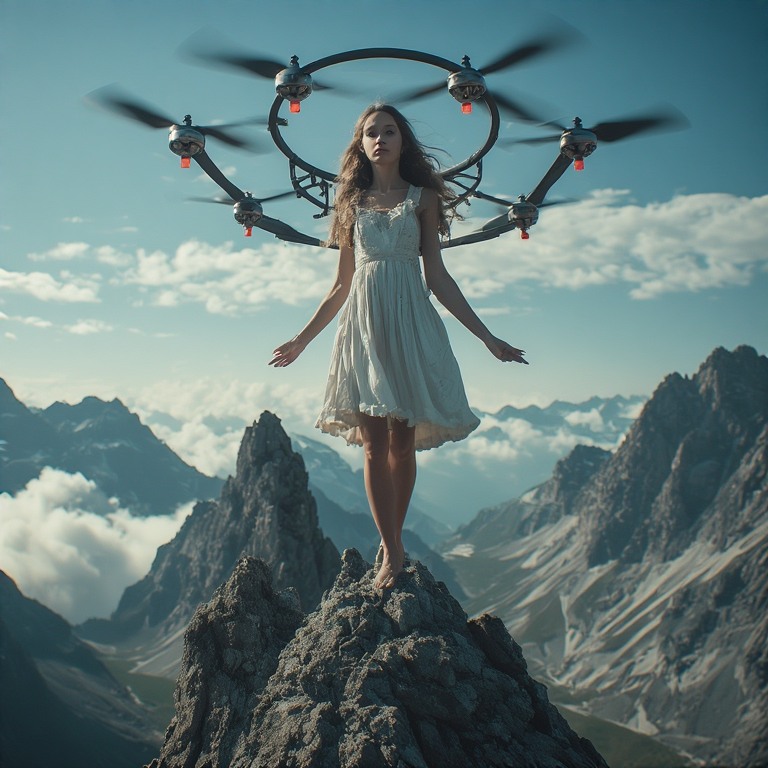
The dream of flying has accompanied humankind since we first observed the sky. Long before technology existed, people imagined what it would be like to simply lift off the ground, become weightless, and see the world from a bird’s-eye view. This desire is more than just curiosity—it’s a symbol of freedom, of limitlessness, and of the courage to attempt the impossible.
Today, we’ve reached a point where this age-old dream is no longer just mythology or fantasy. Modern technology has democratized flying: from hot air balloons to airplanes, jetpacks, and personal drone platforms. Particularly exciting are new concepts like “drone rings” or multirotor-based aircraft, which can be visualized as a portable circle of rotors. They function similarly to large drones—except that the human is at the center.
Today, we’ve reached a point where this ancient dream is no longer just mythology or fantasy. These devices aren’t yet commonplace, but they demonstrate how close we’ve come to personal flight:
– Lightweight electric motors generate enough thrust to lift a person.
– Sensors automatically stabilize the system, eliminating the need for pilots to manually control everything.
– Batteries are becoming more powerful, allowing for longer and safer flights.
It’s fascinating: What was once a dream of gods and heroes is now a real option for adventurers, researchers, or simply people who want to experience the skies under their own power. Humans have learned not just to build machines that fly—but machines that allow them to fly themselves, almost as directly and intuitively as a bird.